Vocational Excellence

Fitness Qualifications & Education Pathways

Explore structured fitness education programmes designed around evidence-based science, practical movement coaching, and long-term career progression in the UK.

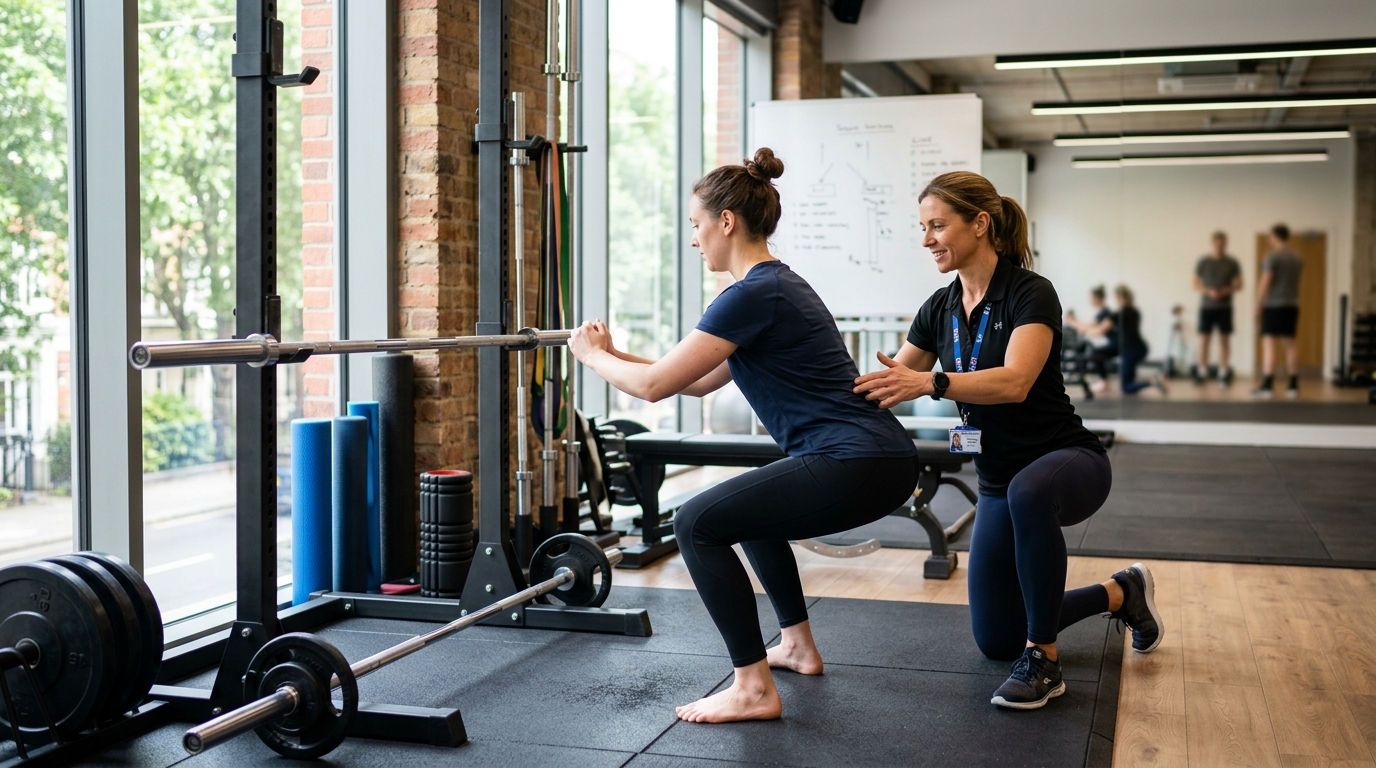
Fitness educator instructing personal trainer student on movement assessment and coaching technique
Personal Trainer Education

Personal Trainer Education

Comprehensive training in client assessment, exercise prescription, biomechanics, and professional coaching practice.

Key Learning Focus

  • Comprehensive functional movement & postural screening
  • Evidence-based resistance training programming
  • Applied exercise physiology & biomechanics
Blended Learning View Course
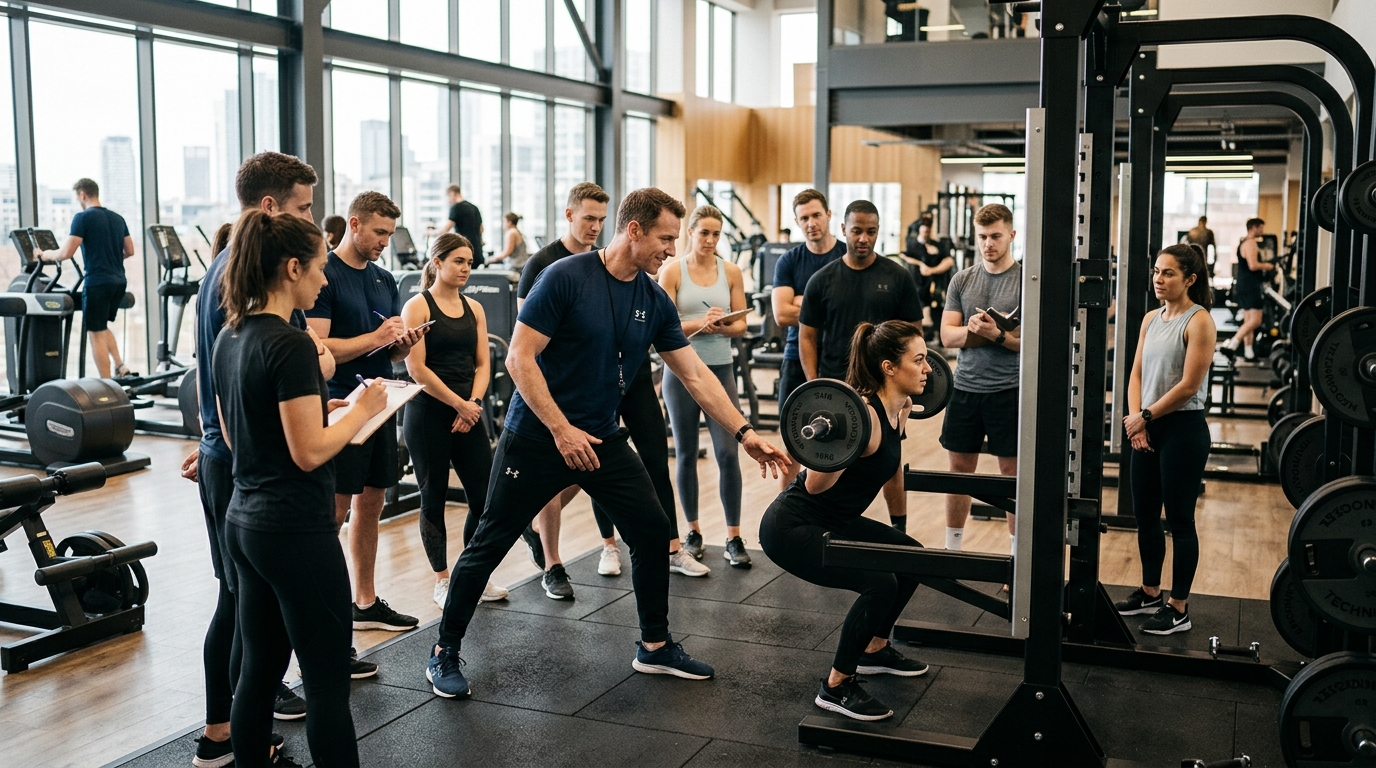
Fitness tutor instructing group of gym instructor students on exercise equipment safety and member coaching
Gym Instructor Training

Gym Instructor Training

Essential foundational training for supervising gym floors, instructing cardiovascular and resistance equipment, and guiding members safely.

Key Learning Focus

  • Gym floor safety, supervision & equipment maintenance
  • Instruction of fixed resistance machines & free weights
  • Cardiovascular equipment protocols & programming
Blended Learning View Course
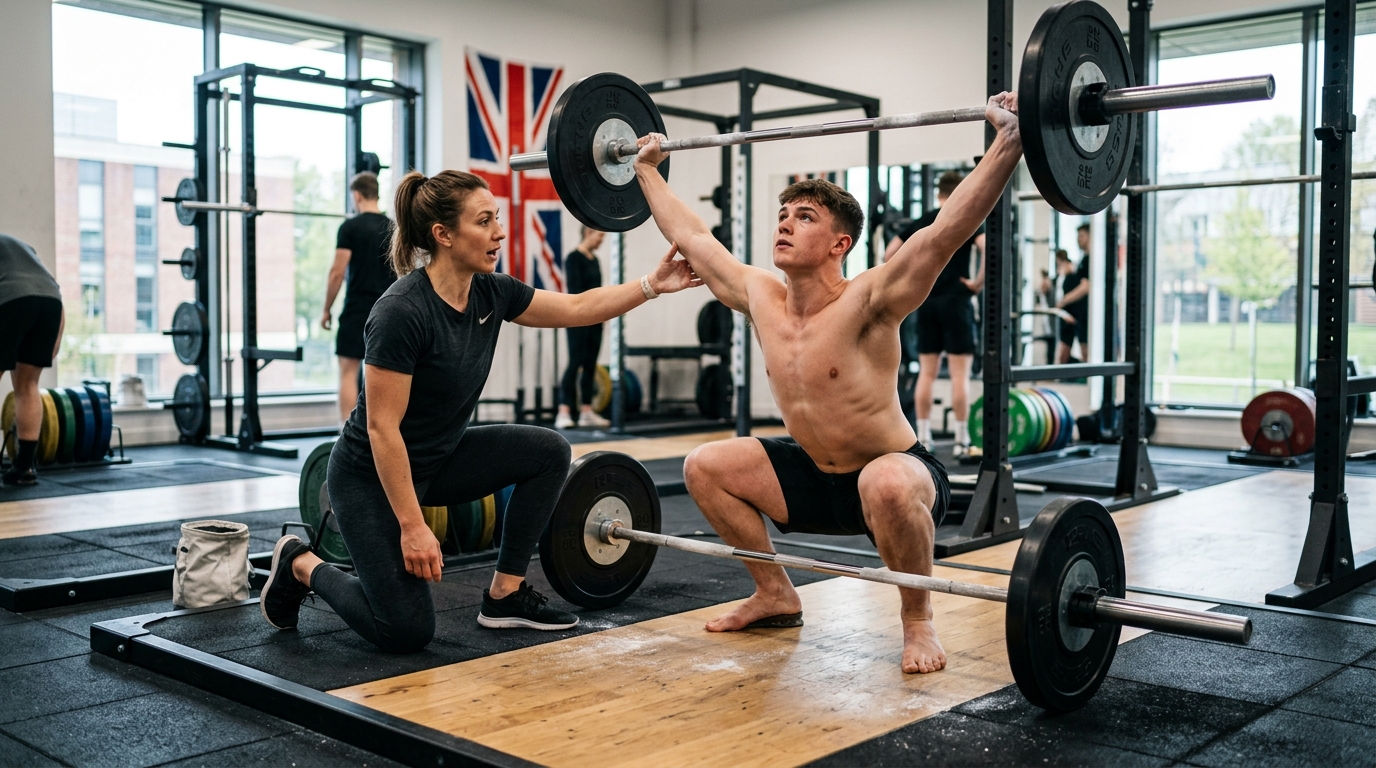
Strength and conditioning educator teaching barbell mechanics and athletic squat positioning in performance gym
Strength & Conditioning

Strength & Conditioning Education

Advanced athletic development, movement mechanics, barbell mastery, and performance programming principles.

Key Learning Focus

  • Barbell mechanics: Squat, Deadlift, Bench, Overhead Press, and Clean variations
  • Force-velocity curve principles & rate of force development (RFD)
  • Plyometric progression, landing mechanics & speed/agility mechanics
Blended Masterclass View Course
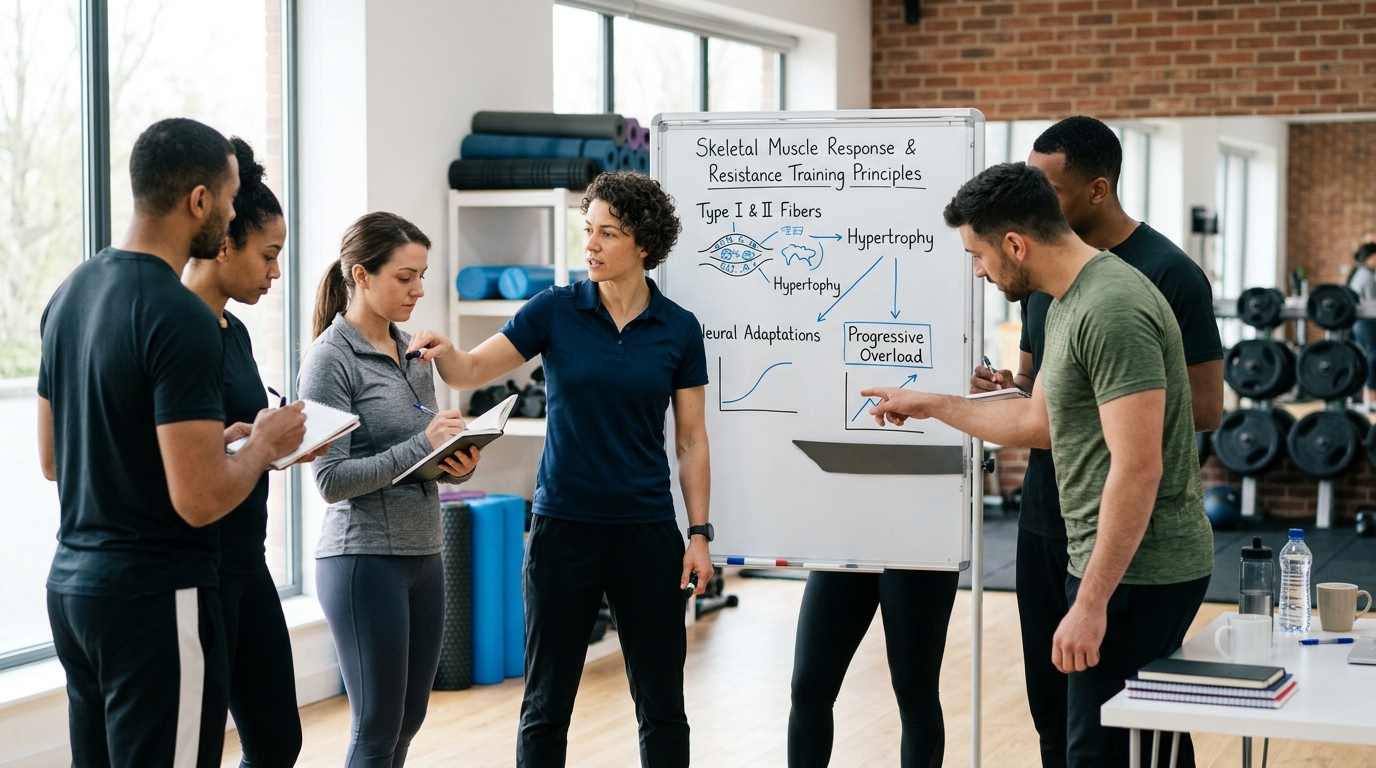
Fitness tutor and students analyzing nutritional guidelines and energy balance diagrams in workshop
Nutrition for Fitness

Nutrition for Fitness Professionals

Evidence-based nutritional science, body composition management, and nutritional consultation boundaries.

Key Learning Focus

  • Energy balance, basal metabolic rate & total daily energy expenditure (TDEE)
  • Protein requirements for muscle protein synthesis & recovery
  • Carbohydrate and fat manipulation for various exercise modalities
100% Online Digital Course with Tutor Support View Course
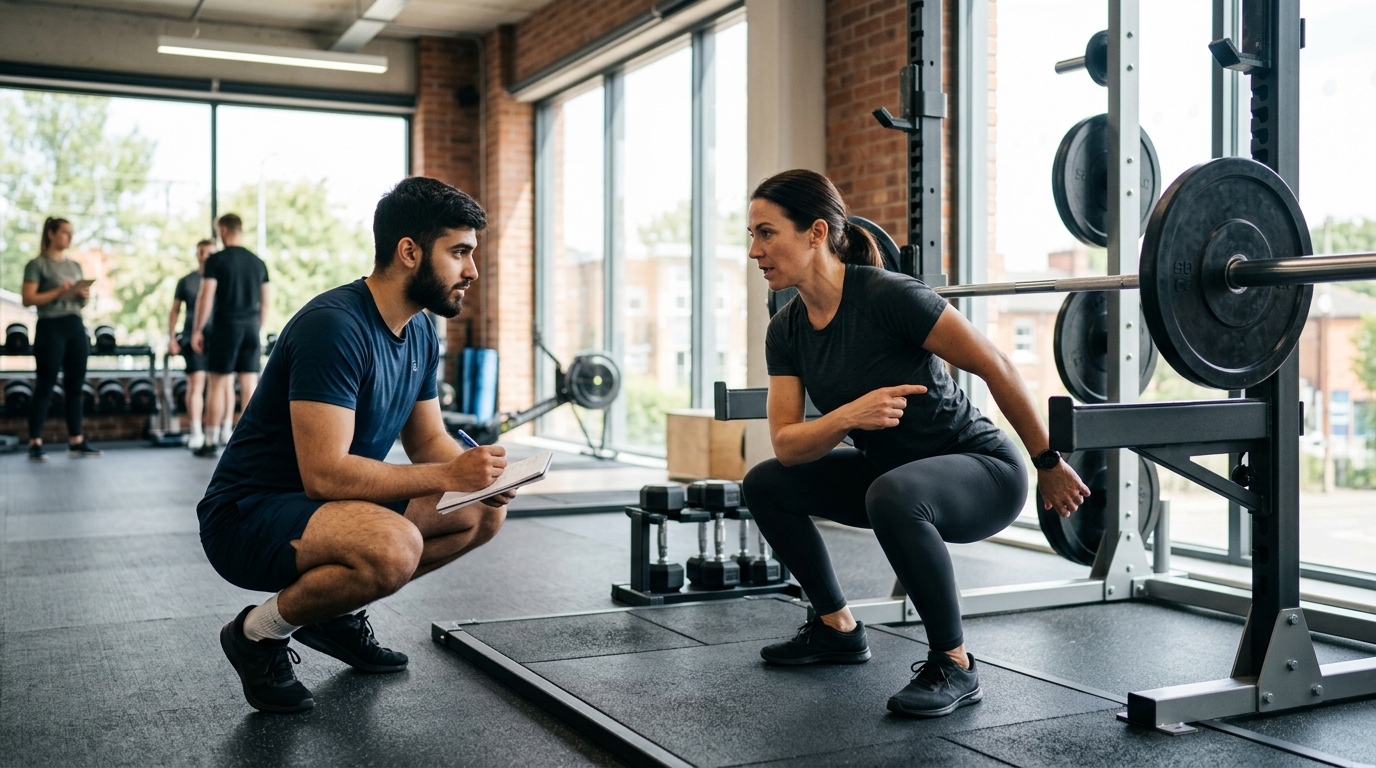
Fitness educator explaining exercise biomechanics and joint angles to trainee
Exercise Science

Applied Exercise Science & Biomechanics

Deep-dive into joint mechanics, muscular torque, force vectors, and the science of human movement.

Key Learning Focus

  • Moment arm physics & mechanical advantage in resistance exercise
  • Joint structure, active vs passive insufficiency & muscle lengths
  • Force direction, resistance profiles & strength curves
Blended Online & Practical Workshop View Course
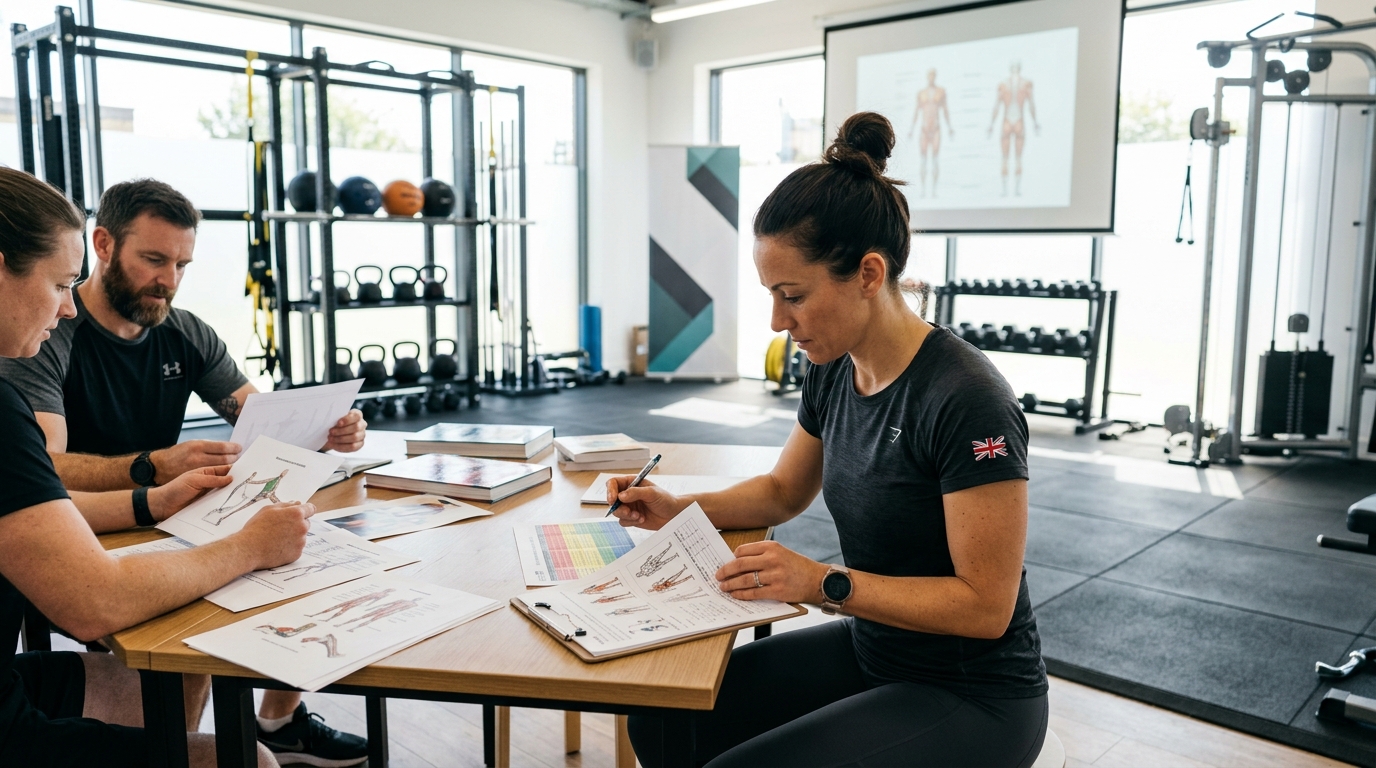
Fitness professional reviewing research papers and training protocols in CPD workshop
Professional Development

Continuing Professional Development (CPD)

Lifelong learning, advanced coaching methodologies, business ethics, and evidence-based career progression.

Key Learning Focus

  • Critical evaluation of fitness research & interpreting scientific papers
  • Advanced client communication & motivational interviewing
  • Exercise considerations for pre/post-natal, older adults & special populations
Flexible Modular Delivery View Course
Progression Framework

How Our Fitness Education Pathways Progress

Compare core pathways to understand prerequisites, primary focus areas, and target career outcomes.

Pathway Prerequisites Primary Focus Career Outcome
Gym Instructor Training None (Entry Level) Gym floor supervision, cardio/machine instruction, inductions Gym Floor Instructor / Health Club Staff
Personal Trainer Education Gym Instructor or equivalent Client screening, movement assessment, bespoke programming, nutrition Independent or Gym-Based Personal Trainer
Strength & Conditioning Personal Trainer qualification Barbell mechanics, power development, athletic periodisation S&C Coach / Performance Specialist

Course Enrolment & Study FAQs

What is the difference between a Gym Instructor and a Personal Trainer?

A Gym Instructor is qualified to supervise the gym floor, conduct equipment inductions, and provide general exercise guidance. A Personal Trainer possesses advanced training in individual health screening, postural analysis, bespoke periodised programme design, 1-on-1 coaching, and nutrition fundamentals.

Are study schedules flexible for working professionals?

Yes. Our blended learning formats combine self-paced digital theoretical modules with scheduled practical workshops, allowing you to study alongside existing work or family commitments.

What resources are provided during study?

Learners receive comprehensive digital study manuals, video movement analysis libraries, exercise programming templates, client consultation forms, and direct access to tutor feedback.